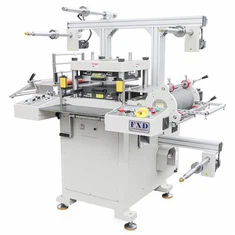
Paper Die Cutting Machine
Description
Technical Parameters
Why Choose Us?
Rich Experience
We are a high-tech enterprise with independent research and development, manufacturing, and marketing capabilities.
Professional Team
We have 33 engineers and over 208 patents. Our quality and sales lead in China, and we have exported to over 10 countries.
One-Stop Solution
We provide complete and comprehensive solutions for customers in industries such as 3C electronics, computers, tablets, screens, medical devices, automotive, and others.
Excellent Customer Service
Feixinda is guided by customer needs, providing customers with flexible material processing equipment such as precision die-cutting and precision mounting.
Die cutting machine is usually a small, portable device that can cut out shapes quickly to save time on your paper crafting projects. They are a go-to tool for creating multiple handmade pieces or producing large numbers of cutout shapes with the same design. Die cutting machines can also be used for crafting techniques like embossing, debossing, and hot foiling techniques!

The die-cutting machine can be used in clean rooms and will not pollute the workshop; it can achieve half-cutting on the thinnest 0.025mm thick base film with stable pressure; it can realize automatic waste discharge after OCA die-cutting, and the entire production process is fully automated.

It uses advanced technology and a high-precision control system to quickly and accurately cut leather according to preset patterns and sizes.

The foam die-cutting machine uses a mold to punch out various foams and foams. It can quickly and accurately cut them into the required shapes and sizes, and can meet the needs of foam and foam processing of various sizes and shapes. need.

The die-cutting machine for cutting light-enhancing, reflective, and diffusion films is a high-precision equipment specially used for processing small home appliance backlights, electronic product screen modules, solar photovoltaics, and other fields.

The die-cutting machine can automatically adjust the pressure for easy adjustment and use; it automatically circulates oil and supplies oil automatically when it is turned on to prevent dry wear of the machine.

Barcode Label Die Cutting Machine
The barcode label die-cutting machine and its supporting auxiliary equipment can realize integrated production of feeding, die-cutting, waste discharge, slicing or rewinding.

The label die-cutting machine is computer-controlled with high-precision die-cutting, dragging and slicing.

Protective Film Die Cutting Machine
Protective films are usually used to protect electronic equipment, glass, plastic products and other products.

Optical Film Die Cutting Machine
The optical film die-cutting machine is a mechanical equipment specially used for cutting optical films.
Speed And Efficiency
One of the main advantages of automatic paper die cutters is their speed and efficiency. These machines are designed to cut paper quickly and accurately, helping to reduce production time and increase productivity. By automating the cutting process, businesses can process larger orders faster and more efficiently, which helps reduce labor costs and increase revenue.
Precise
Another advantage of automatic paper die cutters is their precision. These machines use advanced software and sensors to detect the position of the paper and cutting blades, ensuring that every cut is consistent and accurate. This level of precision is important for producing high-quality finished products and reduces the risk of errors and waste.
Versatility
Automatic paper die cutters are also versatile as they can be used to cut a variety of shapes and sizes. They can also be used to cut multiple sheets at once, which is useful for creating the same shape or design. This versatility makes them suitable for a range of different industries including printing, packaging and stationery.
Save Costs
Using an automatic paper die cutter can help a business save money in a number of ways. First of all, it can save time-consuming and labor-intensive manual cutting, thereby reducing labor costs. Second, it optimizes paper usage and minimizes waste, which helps reduce material costs. In the end, it can help increase productivity, which can lead to higher revenue and profits.
Improve Productivity
The automatic paper die-cutting machine can work continuously for a long time, allowing merchants to increase production efficiency without additional labor. This means businesses can process larger orders or take on more jobs without hiring additional staff. Additionally, machines can be programmed to perform specific tasks, reducing the need for human intervention and further increasing productivity.
Types Of Paper Die Cutting Machine
Manual Paper Die Cutting Machine
Most experienced paper crafters will tell you about their first-ever manual die cutting machine. These die cutters contain heavy-duty rollers and are sold with a collection of plates. The plates are unique to the machine and cannot be swapped out with plates from another manufacturer. The thickness of the plates allows the precise amount of pressure needed to cut out the desired material.
Digital Paper Die Cutting Machine
As the name suggests, digital die cutting machines are controlled using digital tools, such as a cartridge or computer program. These machines differ greatly from hand-cranked machines. One key difference is that this machine uses a sharp blade instead of pressure to cut the desired material. To use it, the user selects or creates a design using special software, and the design is then sent to the machine wirelessly or through a cable. The desired cutting material is then passed through the machine, often adhered to a carrier provided by the manufacturer. Once the cutting is complete, it can be ejected from the machine.
12 Materials to Play With Using Your Paper Die Cutting Machine
Card Stock
This heavyweight matte finish paper comes in an insane amount of colors, and it's defined as anything from 50- to 110-pound paper. Rule of thumb: the heavier the paper, the higher the quality. You'll want to use the heaviest (highest-quality) card stock for die cutting, especially when making intricate designs - it holds together much better.
Patterned Paper
Patterned paper can be any weight when die cutting but, again, heavier paper is best. Mixing up different patterns will create even more visual interest for your project.
Vellum
Vellum is a translucent paper product that's often card stock weight. It's reminiscent of parchment made from animal skins, but these days it's made from paper pulp. Vellum is a great alternative to heavier opaque papers, and it has a soft elegance that we're gaga over - making die cutting next-level awesome.
Foiled Paper
Metallics - especially gold - are right on trend in fashion, weddings and, of course, paper crafting! And while foil paper isn't new to the scene, it's gotten much easier to find over the last few years. It's pretty enough on its own, but shines even brighter when die cut. Just be careful not to scratch the foil when cutting, and don't get sloppy when you're adhering it.
Chipboard or Cardboard
Don't stray away from these heavier materials - most chipboard and cardboards will cut pretty easily with steel rule dies, and some will even cut with low-profile dies. Die cutting chipboard adds stability to a larger project, or you can go with corrugated cardboard for added texture. Just be sure to refer to your owners manual first to make sure your machine can cut these materials.
Glitter Paper
Adding glitter is always a fab idea, but loose glitter can be time-consuming and messy. Glitter paper gives the same look on die cuts without all the hassle.
Woven Fabric
We're talking about a big range here: denim, silks, burlap, canvas, cottons and twills. Basically, you can die cut any fabric created by weaving threads together to form a cloth. Thinner fabrics are pretty easy to cut, especially with low-profile dies, but even heavy fabrics like denim can be die cut if you have a steel-rule die.
Felt
Felt is made by condensing and pressing fibers together, and that's great for die cutting because the material won't easily tear or unravel, and the matte surface and cozy appeal have a charm all their own. Felt cuts really easily in a manual die cutting machine, but if you're doing cuts that are intricate, make sure you don't pull the felt too firmly - it will break if tested.
Vinyl
Vinyl is hugely popular with digital die cutting machines, but it's sometimes overlooked on manual ones. Vinyl die cuts can be used in home decor projects, and they make great stickers because they usually come with an adhesive backing.
Cork
With its instant texture that's so easy to cut, why wouldn't you use cork in your die cutting projects? Check your local craft store for sheets of cork - sometimes it's even available with adhesive backing that'll make your crafting that much easier.
Wood Veneer
Wood veneer is a stunning paper alternative that adds a rustic, nature-y element to your projects. We can't get over how much we love the look!
Foam
Foam die cuts are great for children's crafts, but adults can also have some fun here too. Placing die-cut foam layers under paper die cuts is a great way to make your project literally pop off the page. You can even die cut your own stamps from foam, then adhere them to acrylic blocks before you ink and stamp the day away.
Components of Paper Die Cutting Machine

The Equipment's Main Body
The frame of the Die cutting machine serves as the primary structure of the entire machine, providing a stable working platform and support to ensure that the machine maintains stability and precision during high-speed operation.
Automatic Paper Feeding System
Automatic Die cutting machines are commonly equipped with an automated paper feeding system. This system can automatically feed paper into the Die cutting machine, ensuring a continuous and efficient production process. It typically comprises air suction nozzles, paper conveyors, sensors, and an automatic control system. Depending on various paper parameters such as size, thickness, softness, and more, it adjusts the appropriate height, position, angle, and air suction nozzles to accurately introduce the paper into the Die cutting machine.
Control System
Die cutting machines are equipped with sophisticated control systems for overseeing and regulating the machine's operation. This system typically incorporates devices like a PLC (Programmable Logic Controller), a touchscreen user interface, and sensors, enabling automated control and fault detection. Operators can perform tasks such as parameter configuration, production monitoring, and troubleshooting through the touchscreen interface, thus improving production efficiency and operational ease.
Transmission System
The functioning of a Die cutting e relies on a dependable transmission system to propel the motion of its various components. This system usually comprises motors, gear reducers, transmission wheels, and gears, facilitating the transfer of power to different parts of the Die cutting machine. The design and calibration of the transmission system have a direct influence on the machine's operating speed, precision, and stability.
Die-Cutting System
The die-cutting section of a Die cutting machine is primarily responsible for die-cutting the paperboard to create the desired shapes and structures. Die-cutting is the process of cutting paperboard into the required shape, typically accomplished using die-cutting tools.
Safety Protection System
To ensure the safety of operators and the smooth operation of the Die cutting machine, a range of safety protection systems is commonly integrated. These systems encompass protective shields, safety switches, emergency stop buttons, and other mechanisms designed to promptly detect and respond to anomalies during machine operation. This, in turn, safeguards the well-being of operators and the integrity of the equipment.
There are electric powered or motorized manual die cutting machines too! These are different from digital or electronic ones where you'll need the help of a computer to make these work. Motorized or electric manual die cutters still need to be manually operated. However, instead of a lever, you press a button for the machine to start cutting.
A manual die cutter works by cutting shapes through pressure. These typically use a roller mechanism manually operated by a handle or crank to put pressure between dies and die cutting plates to cut out the designs.
A digital die cutter works by using programmed blades or even lasers to cut shapes. They are far more complex than manual die cutting machines. So both differ significantly from each other despite being used for basically cutting out shapes!
In the paper crafting industry, a manual die cutter is typically used, and it works by sandwiching paper or cardstock between the cutting plates with a die to create a die cut. These machines sometimes are bundled with die cutting tools which include metal shims and cutting plates along with the dies.
To use a manual die cutter for paper crafting, simply place a die on a stamped image or on a cardstock. Then place them between two cutting plates and put them all through the machine to get a clean cut.
7 Tips to Choose the Right Paper Die Cutting Machine for Your Business or Project Needs
Type of Die-Cutting Machine - Manual or Digital
Looking for tips on buying a die-cutting machine? The first item on the list of critical considerations is the type of equipment. Die-cutting machines are classified into two types: manual and digital. A hand crank with flatbed die cutters or kiss cutting is used in a manual die-cutting machine that uses pressurized force to cut the material through a slot. The material is embossed or sliced in a partial cut. Such tools are highly inexpensive and portable.
Manual Die-Cutting Machines
Although manual machines are less expensive as an initial outlay, their long-term operating costs may be higher due to the cost of separate dies. However, the simplicity of using the many different dies that are readily accessible and that coordinate with their preferred stamps may make stampers who don't know about die-cutting adore manual paper die cutting machines. Using plastic embossing folders, this paper die cutting machine can emboss sheets and thin metal, a feature that digital machines lack. Manual cutters can also effortlessly cut various materials using steel rule dies.
Digital Die-Cutting Machine
A digital die-cut machine operates similarly to a printer for cutting materials. Cartridges, which link to a computer or plug into the equipment, are used in this type of equipment. If you wish to develop personalized designs, try to buy die-cutting machines that link to a computer. All digital cutting die machines don't let you generate bespoke designs; thus, ensure that the machine's software lets you accomplish the die-cutting process easily.
Cost
Regarding die cutters, manual devices can cost as little as $50, while heavy-duty equipment can cost $1,000 or more. When purchasing die-cutting equipment, it is critical to consider your needs. Businesses and professional artists may consider going for superior equipment. It's usually preferable to opt for a quality machine that costs somewhat more than settling for a cheaper model, which may be problematic. Other considerations include the cost of dies, new blades, accessories and equipment, cartridges, and cutting mats that may need to be replaced.
Material and Versatility
Consider the types of materials you would use and the projects you would construct using a die-cut machine. Do you want a rotary die, a semi-rotary die, a flatbed die, or a cylindrical die? Now consider if you want intricate dies, metal shapes, flexible dies, solid dies, steel rule dies, or something else. Heavy-duty machines can cut through a more extensive range of materials. Investing in a heavy-duty tool makes no sense if you cut primarily using paper-based materials. The equipment's adaptability should also be considered. Other than cutting, you may need abilities like embossing and drawing.
Ease of Usage
Even if you have high-quality die-cutting equipment, you may find using the machine's software challenging. You might have a steep learning curve, or there isn't enough assistance, and ultimately, you die. A good suggestion is to research the software accompanying the computer and see the types of tutorials offered. Additionally, research the firm from which you intend to purchase the machine and get flexible dies. Several companies have lessons, email, phone support, and forums to help you get a good start at die-cutting.
Dimensions and Portability
Portability and compactness may also be crucial considerations when checking for die cuts. Is your working area small? Then it is better to begin die-cutting using a service provider. If you intend to travel with the die-cutting machine, you must also consider its weight. Die-cutting machines can weigh as little as 2 pounds and as much as 40 pounds with many metal dies.
Tips for Using Paper Die Cutting Machines
Choose The Right Machine For Your Needs
Before purchasing a die cutting machine, consider the type of projects you plan to work on, your budget, and the features that are most important to you. If you're looking for a machine that can cut a wide variety of materials and offers embossing capabilities, a manual machine might be your best choice. If you prefer a lightweight, portable machine with design flexibility, a digital die cutting machine could be a better fit.
Invest In Quality Materials
High-quality materials will make a significant difference in the final outcome of your projects. Invest in good quality paper, cardstock, vinyl, and other materials to ensure your die cuts look professional and last longer.
Keep Your Cutting Mats Clean
Cutting mats can become dirty and lose their stickiness over time. To extend the life of your cutting mats, clean them regularly with a scraper and a gentle adhesive remover.
Test Cut Settings
Before cutting your final project, perform a test cut on a scrap piece of the material you'll be using. This will help you determine the optimal settings for your die cutting machine and avoid ruining your materials.
Keep Your Blades Sharp
A dull blade can result in uneven cuts and damaged materials. Be sure to replace your blades regularly, and always have a spare on hand.
Organize Your Dies And Designs
If you have a manual die cutting machine, invest in a storage solution for your physical dies. For digital machines, create a system for organizing your digital designs, so you can easily find what you're looking for when inspiration strikes.
Explore Online Resources
There are countless online resources available to help you learn new techniques and find inspiration for your die cutting projects. Browse forums, blogs, social media groups, and video tutorials to discover new ideas and connect with fellow crafters.
Take Advantage Of Free Design Files
Many websites offer free design files for a digital die cutter, giving you a wide variety of options to choose from. Utilize these resources to expand your design library and try out new projects without breaking the bank.
Experiment With Different Materials
Don't be afraid to try cutting different materials with your die cutting machine. You may be surprised at the unique and creative projects you can make with materials like fabric, leather, or even thin metal sheets.
Keep Your Machine Clean And Well-maintained
Regularly clean and maintain your die cutting machine to ensure it continues to function efficiently and produce high-quality cuts. Check the manufacturer's recommendations for cleaning and maintenance to keep your machine in tip-top shape.
Our Factory
Founded in 2008, Guangdong Feixinda Intelligent Equipment Co., Ltd. is a high-tech enterprise with independent research and development, independent manufacturing and independent marketing. Feixinda is guided by customer needs, providing customers with flexible material processing equipment such as precision die-cutting and precision mounting. With years of development, has served 5000+ customers and obtained 200+ invention patents, Feixinda is committed to becoming an international leading intelligent equipment provider, creating a century-old enterprise with employee happiness, customer trust and social respect.

Our Certifications


Team Introduced
The special team is divided by the core personnel of each project, which is a mature technology, efficient and innovative R&D team with higher education background and many years of practical experience. Strictly grasp the direction of product research and development, broaden the original die-cutting equipment field across downstream manufacturers' steps, and provide complete and comprehensive solutions for customers in 3C electronics, computers, tablets, screens, medical, automotive and other industries.


Ultimate FAQ Guide to Paper Die Cutting Machine
Hot Tags: paper die cutting machine, China paper die cutting machine manufacturers, suppliers, factory, die cutter envelope cutting, die cutting report, die cutting recycling, die cutting plan, die cutting disposal, die cutter precision measurement
|
Name |
unit |
Paper Die Cutting Machine |
|
Feeding width |
mm |
660 |
|
Maximum die cutting area |
mm |
650(L)*650(W) |
|
Maximum operating speed |
PCS/h |
6000 |
|
Mold base stroke |
mm |
27 |
|
Stroke adjustment |
mm |
15 |
|
Dimensions |
mm |
2450(L)*2050(W)*1800(H) |
|
Machine net weight |
kg |
4800 |
|
Total power |
kw |
AC380V 15KW |
|
Air source specifications |
|
0.5-0.7Mpa |
|
Lubrication method |
|
Automatic gap type oil supply |
|
Applicable cutter |
|
Wood mold, carving mold |
Previous
No InformationNext
Slitting MachineSend Inquiry